

Realtime Lab
The Realtime Lab pioneers new frontiers in real-time technology and virtual production, pushing the boundaries of creativity in gaming, film, and animation.
With state-of-the-art studio facilities in Dundee and Edinburgh, the Realtime Lab is a collaborative space for industry leaders, creative visionaries, and researchers to explore virtual production. Looking at the integration of real-time and AI technologies, this lab is a hub for experimenting with dynamic interactive experiences.
- Where
- Water Edge, Dundee First Stage Studios, Edinburgh
- Led by
- Abertay University
- Partners
- The University of Edinburgh Chroma Developments CodeBase Interface
Meet our Realtime Partners


how it works at realtime lab

Areas of expertise
The Realtime Lab team is based at Abertay University and the University of Edinburgh, working in collaboration to advance immersive and real-time technologies for the UK’s creative industries. Abertay University brings its world-leading expertise in gaming, interactive entertainment, and digital technology while Edinburgh has a global reputation in film, television and animation production, as well as excellence in machine learning and artificial intelligence.

Funding and Support
We will be involved in Industry Access Programmes focusing on either Enterprise and Commercialisation (E&C) or Prototyping and pilots Programme (PPP). E&C supports early growth businesses and startups with a series of development programmes and PPP invites innovators to apply for funding for specific project opportunities. The Industry Access Programmes are run by the CoSTAR National Lab and can be accessed from any of our labs across the UK.
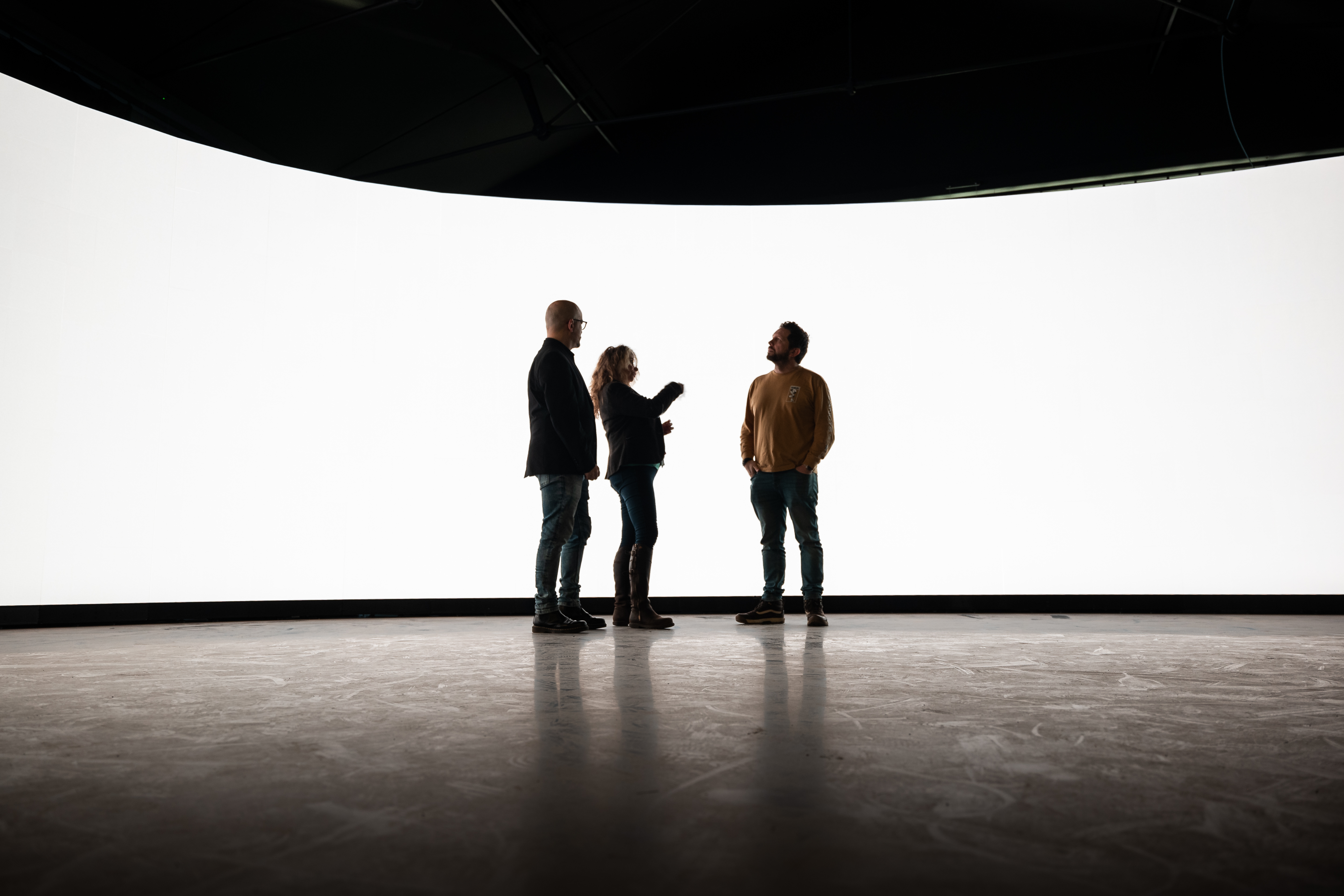
Facilities
The Realtime Lab is a space where creativity and cutting-edge technology come together. Offering access to state-of-the-art facilities, along with funding and expertise for research & development, the lab helps creative organisations to explore the potential of virtual production and real-time technology. Get in touch to discuss how you can work with us to experiment, collaborate and bring bold ideas to life.
Facility specifications include:
Fully commercial capable virtual production studio using the latest technologies and techniques. Most suitable for medium sized productions such as TV shows, Music Videos and advertising shoots.
LED Screen: 15*3 meter AOTO (1.5mm pixel pitch) screen. Movable light panels and ROE 3.6*3.6-meter LED roof for full 360 degree lighting for Virtual Production
Powered by 4 Brompton Sq200 LED processors
Rendering by 3 Dedicated custom-built rendering machines each running RTX A6000 GPU's (Ada Lovelace Generation)
All Rendering and Brompton systems will be running Video over IP (SMPTE 2110) for real-time virtual production
Control System: Dedicated single machine using Nvidia RTX 4090 graphics processing. Which controls all rendering machines and LED processors
Networking using Nvidia Mellanox switch and Bluefield 2 Network cards
Grandmaster clock: Brainstorm DXD8 for genlock and Synch
Camera Tracking: provided by Mosys StarTracker MAX
Camera and Lenses From CANON: New Canon C400 and RF lenses to shoot with which directly interface into the Unreal engine virtual Production System
Meet our partners at Realtime Lab
People at Realtime Lab

Professor Gregor White is Chair of Applied Creativity in the Faculty of Design, Informatics and Business at Abertay University in Dundee. A leader in digital interactive entertainment, Gregor has secured over £40 million to establish innovation centres like InGAME and Abertay cyberQuarter. He is also a key contributor to the CoSTAR network, advancing research in creative technologies and fostering collaborations that shape the future of the creative industries.

Melissa Terras MBE FREng is Professor of Digital Cultural Heritage at the University of Edinburgh, specialising in the digitisation, mining, and analysis of cultural heritage, and using them to build award-winning digital products and services. A leader in the field of Digital Humanities, she has secured over £55m in research funding. Terras was Director of Creative Informatics, the Edinburgh based AHRC Creative Cluster supporting innovation in creative and cultural contexts, and is a founding Director of Transkribus, the AI-powered platform for text recognition of historical documents.

Caroline leads strategy for the engagement with the Creative Industries at the Edinburgh Futures Institute. She initiates and maintains industry relationships across the creative and cultural sector with trade associations, creative networks, creative companies and practitioners. Engagement dialogue ascertains the needs and challenges of the sector regarding data-driven innovation which inform skills support, instigating academic collaboration, supporting entrepreneurship and seeking research and innovation funding to address these challenges. She works closely with colleagues and teams across the University to support the Edinburgh Futures Institute’s interdisciplinary and collaborative approach. She has developed various skills programmes and most recently founded the CreativeTech Scotland Gathering.

Nicola Osborne (they/them) is Manager of the Institute for Design Informatics, University of Edinburgh, a hybrid professional services and research role, including senior roles on large-scale funded research projects. As Manager of the Institute for Design Informatics they work closely with the Institute Directors on strategic planning and lead delivery of administrative and non-academic services. They also provide specialist advice, operational coordination, and support business development as well as evaluation and reporting.
Nicola’s research roles currently include Partnerships and EDI Director and Co-I for the UKRI Designing Responsible Natural Language Processing (NLP) Centre for Doctoral Training; Creative Industries Lead for the AHRC-funded BRAID project; and EDI lead and co-I of the AHRC-funded CoSTAR Realtime Lab, supporting R&D in converged media.
Nicola also works on the EU-funded EKIP: Cultural and Creative Industries Policy Engine project, exploring development of policies that support creative innovation. They represent the University of Edinburgh on the EIT Culture & Creativity (through Una Europa), which seeks to support creative industries innovation through interventions across Europe.
Nicola managed Creative Informatics (2018-24) supporting creatives to do innovative work with data and contributing an estimated £78.5m GVA impact for Edinburgh and South East Scotland. Nicola also led a connected Creative AI project (2022-4) and co-edited Data Driven Innovation in the Creative Industries (Routledge 2024). They co-authored Creative Informatics Ethics guidance (v1. downloaded 1K+ times), supported and advised 130 SMEs with their own R&D ethics, and are currently an ethics mentor for the CoSTAR Network. Nicola is co-editor of: Data Driven Innovation in the Creative Industries (Routledge, 2024).
Prior to joining Design Informatics, Nicola provided expertise on social media and emerging technologies (including as co-lead of the University of Edinburgh Digital Footprint MOOC), developed new business opportunities and managed R&D projects, with academic, technical and industry partners at EDINA (2009-18).
Nicola sits on the Turing Institute Humanities & Data Science Interest Group, the Journal of Open Research Software Editorial Advisory Board, is a member of the Association of Internet Researchers. Nicola was also a Non-Executive Director for The Space, a UK CIC supporting arts, culture and heritage organisations to undertake innovative digital work from 2022-25. They sit on a number of funding panels and expert groups, and mentor for several CreaTech SMEs. Nicola is also an experienced speaker and regularly performs with The Provocateurs (formerly the Cabaret of Dangerous Ideas) including regular appearances at the Edinburgh Fringe. In summer 2025, Nicola was presented with the University of Edinburgh’s Research Impact Enabler award for their work on Creative Informatics.

Dr Suzanne Duce joined CoSTAR in July 2025 as the Realtime Lab Project Manager at the University of Abertay, Dundee. She holds a BSc in Chemistry from the University of Southampton and a PhD in Magnetic Resonance Imaging (MRI) from the University of Cambridge. In 2007, she joined the University of Dundee after being awarded a Wellcome Trust Career Re-entry Fellowship to continue her work in MRI. Since then, Suzanne has managed several MRI and clinical trials, including a clubfoot and a large multi-centre cardiovascular drug trial. She has worked in the School of Life Sciences as the Outreach and Training Officer in Computational Biology and then moved to Computing as the Centre for Argument Technology manager in 2023, managing a team using AI to understand argumentation. Suzanne is very creative and has led a wide range of public engagement (PE) activities, including devising a course on bioinformatics for school pupils, used across the globe, and multiple uses of the arts to explain and showcase science. She has won several PE awards for this work, including the Brian Cox Prize and the Stephen Fry Award.

Yasmin Sulaiman is SVP of Ecosystems at CodeBase, who are partners on the CoSTAR programme. CodeBase helps people build better startups, and since 2022 have run the Scottish Government's Techscaler platform. Yasmin started her career in journalism, becoming Editor-in-Chief at Scottish arts publication The List, and then joined Creative Edinburgh as Executive Director, where she worked with and advocated for the capital's creative community. Since joining CodeBase, Yasmin has worked with hundreds of founders to help bridge the gap between the creative and tech sectors. Yasmin is also a Trustee at the Edinburgh International Festival.

Phillip Vaughan is a Researcher, Practitioner and Senior Lecturer, with over 26 years’ experience in industry and academia, is a Co-I on CoSTAR (National and Network), and has expertise in virtual production, real-time pipelines and digital avatars. Academically, Phil was previously a Co-I on AHRC’s £11M InGAME project as well as other technology-led funded research projects over the years including game development, digital avatar production and eye tracking. His professional work includes productions with the BBC, Sony, DC Comics and Warner Bros. In this work he was responsible for the implementation, production and teaching of highly specialised 2D & 3D animation and visual effects techniques, and credited on published work such as Braveheart, Jim Henson’s Farscape, Star Trek, Wallace and Gromit, Teletubbies, Tom & Jerry, Commando Comic and Superman, as well as various other original IPs.

Dr Caterina Moruzzi is Co-Investigator in CoSTAR Realtime Lab, focusing on the responsible integration of AI technologies in creative workflows. She is Chancellor's fellow in Design Informatics, University of Edinburgh and BRAID Research Fellow, in collaboration with Adobe. She has a Ph.D. in philosophy of art and has a background as music performer.

Emily Bailey is R&D Fellow in VFX and Virtual Production Pipelines in CoSTAR focusing on innovation across production pipelines through CR&D with industry partners. She has an industry background in live TV and events, having worked as a Multi-cam Director and Vision Mixer for broadcasters such as Sky, BBC, ETP and IMG. She also has an AV art practice situated across the performing arts and animation and has collaborated with companies such as Rambert and exhibited across the UK arts scene.

Ecem Ince is an R&D Fellow in Codesign and User/Audience Experience at CoSTAR. Ecem previously worked as a UX researcher in university-industry projects in emerging technology context, including UX research for Hyundai in AV concept development, and Metavethics Institute in ethical XR development. She is also a designer with a background in art and design.

Sabrina is the Administrative Assistant supporting the establishment and delivery of the CoSTAR Realtime Lab at the University of Edinburgh. Alongside this, she is pursuing an MSc in Environmental Sustainability. Sabrina has previously worked as a technician for live events, including across a number of venues and productions at the Edinburgh Festival Fringe.

Calum Main is Postdoctoral Research Fellow in XR Technologies in CoStar Realtime Lab, focusing on the integration of Virtual Production pipelines with traditional filmmaking and animation technologies. His PhD focused on development pathways between academia and industry within the Scottish animation sector, specifically on building collaborative frameworks and training infrastructure. He has industry experience working as an animator, most recently on short film and advertisement productions. Calum's own practice looks to integrate stop-motion animation with 3D digital workflows.

Andrew Connor is a Lecturer in Design and Digital Media at Edinburgh College of Art. His research centres on cross-modal perception in 3D and immersive design. As a co-investigator on CoSTAR, his focus is on how virtual production techniques can enrich the learning experience for our staff and students.

Dr Nichola Dobson is a Senior Lecturer in Animation at Edinburgh College of Art, University of Edinburgh. Founding editor of Animation Studies (2006 - 2011) and Animation Studies 2.0 (2012- present), she has published on animation, television genre and fan fiction, including Norman McLaren: Between the Frames (2018) for Bloomsbury and Historical Dictionary of Animation and Cartoons, Volume 2 (2020) for Scarecrow Press. She is currently working on the Routledge Companion to Animation with Paul Taberham. She was President of the Society for Animation Studies between 2015 and 2019. She is currently the Director of the Animation Research Network Scotland.
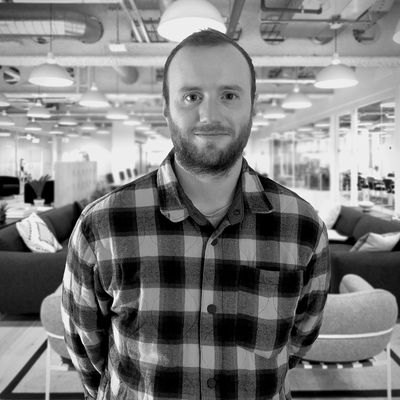
Finlay Pearston is a digital artist and educator with extensive professional experience spanning visual effects, game development, and digital artistry. Having spent years professionally developing games that simulate real-world locations and experiences, he brings a deep understanding of industry best practices into both his teaching and research. Specialising in the design and development of immersive, high-fidelity real-time environments, with a focus on performance and technical excellence. His cross-disciplinary background informs a flexible approach to digital media and has a track record of research within virtual environment pipelines for games, heritage and the renewable energy sector.

Haocheng Yang is an R&D Fellow in Virtual Production and Game Technologies. With a computer science and engineering background, he specializes in full-pipeline game development through engines such as Unity, Unreal Engine, Godot, and Roblox Studio, and has published multiple indie titles. His XR work integrates haptic suits and motion capture technologies, including AR installation at London’s Wellcome Collection and haptic performance with Scottish Youth Theatre.

Dr Andrea Szymkowiak is a Reader in User Experience in the Faculty of Design, Informatics and Business at Abertay University. With a background in Psychology and Industrial Engineering, her research focuses on the investigation of user experiences with digital systems. She has worked as a Co-Investigator on InGAME and her current research focuses on the exploration of social presence and virtual characters in human-centred technology, as well as human behaviour in cybersecurity as part of the Abertay cyberQuarter.

Marc currently oversees Digital and Media Services at Edinburgh College of Art and the Edinburgh Futures Institute. With a background in traditional arts and crafts, including painting and ceramics, he transitioned into the technology sector, amassing a diverse skill set spanning over two decades in audio-visual and information technology.
His recent work has concentrated on technology support, service design, and management, aimed at enhancing user experience and operational efficiency. Over the past few years, Marc has applied this knowledge in supporting CoSTAR Realtime, contributing to its groundbreaking efforts in immersive and real-time technologies.